Painted Cabinets That Last: Conversion Varnish vs. Lacquer
Conversion varnish and catalyzed lacquer behave very differently on a painted door. Here is what holds up in NYC kitchens, and what touch-up can honestly fix.
· the kitchen guy
painted cabinets have a reputation for chipping, yellowing and showing every fingerprint. some of that is deserved. most of it traces back to one decision made before the first coat: which finish system goes on the door.
"paint" on a cabinet is not the paint on your walls. the best paint finish for cabinets is a catalyzed, factory-sprayed film that cures chemically instead of simply drying. here is how those systems differ, and what to expect once a door has a few years of life on it.
why painted doors fail in the first place
almost every failure falls into one of five buckets:
- edges and corners. a door edge takes the most impact and holds the thinnest film. this is where chips start.
- joints. rail-and-stile doors move at the joint with the seasons. a rigid film cracks along that line.
- moisture. steam near the range, a dishwasher exhaust, a leaking supply line under the sink. water gets in at unsealed edges and lifts the film.
- heat and light. a door beside a stove or a south-facing window in a pre-war co-op sees more cycles than one in a hallway.
- hands and cleaners. oils and the wrong spray cleaner soften weak films and dull the sheen around pulls.
new york adds a seasonal swing. steam-heated apartments can sit at 20–30% relative humidity in january and 60–70% in august. wood moves across that range, and the finish has to move with it or crack.
conversion varnish, catalyzed lacquer and plain lacquer
three terms get used loosely. they are not the same.
plain (pre-catalyzed) lacquer
easy to spray, easy to repair, and softer. it is a decent finish for low-traffic furniture but a poor choice for a working kitchen. the film stays reworkable, which also means it stays vulnerable to solvents and heat.
catalyzed lacquer
a lacquer with a hardener added just before spraying. it cross-links as it cures, so it resists water, household cleaners and abrasion far better than plain lacquer. pigmented versions lay down smooth and level, and they hold sheen evenly across a run of doors.
conversion varnish
a catalyzed alkyd-urea system, also cured by a chemical reaction. it builds a hard, chemical-resistant film and is the traditional benchmark for kitchen and bath work. the tradeoffs are real:
- it is less forgiving to apply. the film needs correct mixing, thickness and cure conditions.
- it can carry a slight warmth, so very pure whites need careful system selection.
- it cures hard enough that it does not "melt in" to repairs the way lacquer does.
for painted cabinetry, the practical answer is a pigmented catalyzed topcoat over a sealed, sanded primer, sprayed in a booth. whether that topcoat is a catalyzed lacquer or a conversion varnish matters less than the system around it. a good catalyzed film over weak prep still fails. a modest film over perfect prep often outlasts it.
the prep nobody photographs
a finish only lasts as long as what is underneath it. on painted doors, we pay attention to three things:
- substrate. stable panels and well-joined solid frames matter more than the topcoat. a painted door needs a core that will not telegraph seams or swell at the edge.
- primer and sanding. a sealed, flat primer coat sanded between layers gives the topcoat something to grip. skipped sanding is the quiet cause of most peeling.
- edge sealing. every edge, including the back and the bored hinge cups, gets finish. an unsealed edge is where moisture starts.
a typical dry film for a durable painted door runs around 4–6 mils across primer and topcoat. thinner wears through at the edges. much thicker looks heavy and cracks at the joints.
then comes cure time. a catalyzed film feels dry in hours but keeps hardening for roughly two to four weeks. doors that are handled, stacked or installed too early show witness marks. a short cure window is part of why finished cabinetry takes time, as we cover in our finish library.
sheen, color and door style: choices that forgive
you can reduce visible wear without changing the chemistry.
- sheen. a satin or low-satin, roughly 20–35 gloss units, hides surface scuffs better than high gloss and cleans better than a flat matte. very flat finishes burnish where hands land.
- color. mid-tone and warm off-whites like Chalk hide wear and touch-ups well. a deep color such as Ivy is beautiful, but a chip shows against the light substrate edge. plan on a more careful household for dark paint.
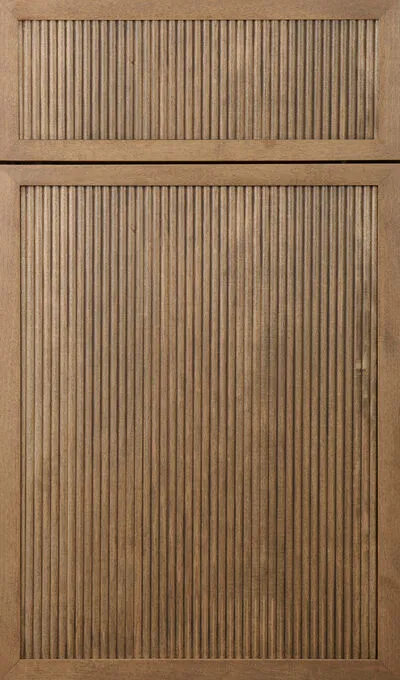
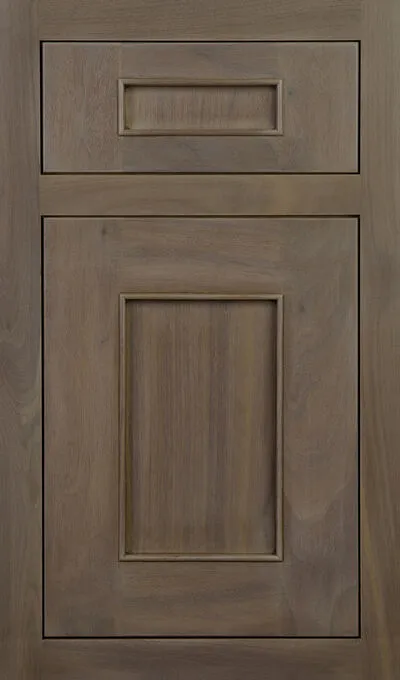
- door style. a slab door like Mercer Wide has no profile to trap grime and no inside corners to crack. an applied-molding door like Lenox has more joints and more detail, so it needs the best prep to stay crisp. it is worth it, but spec accordingly.
in a brownstone parlor-floor kitchen, or an older West Village apartment, radiator heat and tall windows make the case for a stable build and a forgiving sheen even stronger. our West Village page covers how those apartments tend to behave.
touch-up reality
this is the honest part. every painted kitchen gets touched up eventually, and a catalyzed finish changes what that looks like.
what a touch-up can fix:
- small chips at an edge or corner, smaller than a pencil eraser
- pinpoint dings on a flat field
- a scuff that went through the topcoat but not the primer, on a slab door
what it struggles with:
- sheen. brushed-on repair paint rarely matches a sprayed, catalyzed film exactly. it can read slightly flatter or glossier depending on the angle of the light.
- build. a repair sits proud of the surrounding film by a hair. you will feel it with a fingernail.
- large areas. a hand-painted patch on a wide panel is more visible than the original chip.
- color drift. paint ages. a mix from the original batch will often look a shade different next to a ten-year-old door.
because a catalyzed film does not dissolve and blend like old-style lacquer, a repair stays a repair. for a visible panel, the cleaner fix is to remove the door and refinish it in a booth, then rehang it. a single door is a modest job compared with replacing it. you can also keep a small labeled touch-up bottle from your own batch, and use it sparingly.
the best touch-up strategy is prevention: felt bumpers on every door and drawer, no abrasive pads, and a damp microfiber cloth with mild soap in place of spray degreasers.
a short spec checklist
- ask for a catalyzed topcoat (catalyzed lacquer or conversion varnish) over a sealed, sanded primer, sprayed in a booth.
- confirm all edges, backs and hinge bores are sealed.
- choose a satin sheen of roughly 20–35 gloss units.
- pick a color with its wear in mind: lighter and warmer hides more, deep colors show chips.
- keep a labeled touch-up sample from your batch.
- allow the full cure before heavy use.
if the project needs a contractor to coordinate the rest of the room, our design-build studio at thekitchenguy.pro handles that side.
see it in person
a painted finish is easiest to judge in your own light, with a door in your hand. request a sample door or book a showroom visit in Manhattan or Cedarhurst, or by appointment in South Florida, and bring a color you are considering. we will show you the edge, the back and what a chip really looks like.
mentioned in this note
keep reading
Matching a Vanity and Bar to Your Kitchen Cabinets
How to carry one cabinetry collection into a wet bar, mudroom or vanity: what to keep identical, what to adapt, and where moisture changes the spec.
Inset vs. Full-Overlay Cabinets: Which Your Apartment Wants
Inset or full overlay? The answer depends on your walls, your floors and how much drawer you need. A practical guide to the reveal and what it demands of a room.
Tall Pantry Cabinets: Proportions, Door Splits & Reaching the Top
Where to split a tall door, how high is too high, and how to make floor to ceiling cabinetry usable in pre-war, brownstone and loft kitchens.