Shaker Cabinet Doors: Rail Widths, Slim Shaker & Modern Edges
Shaker cabinet doors are won or lost in the rails. Here is how rail width, inside edge and panel depth separate classic, slim and modern shaker.
· the kitchen guy
the shaker door is the most specified door in new york, and the most casually specified. people say "shaker" as if it were one thing. it is a five-piece frame around a flat panel, and almost everything that makes it look dated or current comes down to three measurements: the rail width, the inside edge and the panel depth.
get those right and a shaker door looks calm and architectural for decades. get them wrong and it looks like a catalog default.
what actually makes a door shaker
two vertical stiles, two horizontal rails, one flat center panel. no raised field, no applied molding. that is the whole definition.
the variation is in the proportions. a traditional shaker frame runs 2¼" to 3" wide. a slim shaker runs 1" to 1¾". a "modern shaker" is less a width than an attitude: a slim-to-mid frame, a crisp square inside edge, a shallow panel and no decoration anywhere.
rail width: the number that sets the mood
wide rails read as farmhouse, traditional and sturdy. narrow rails read as tailored and architectural. that is why slim shaker cabinets have become the default for designers who want a door with some shadow but not much history.
the working ranges
- classic shaker, 2½"–3": the frame dominates. it suits pre-war co-op kitchens with picture rail and tall ceilings, where the door needs to hold its own.
- mid shaker, 1¾"–2¼": the safest all-rounder. it works with traditional or transitional rooms.
- slim shaker, 1"–1½": the frame becomes a line instead of a border. in a painted door it looks drawn rather than built.
one rule we hold to: the visible panel should never be narrower than about 1½". a 9" pull-out beside the range with 3" stiles leaves you a 3" panel, which looks like a slot. on narrow doors, drop to a slimmer frame or go slab on that single unit.
the drawer front problem
this is where shaker kitchens quietly fail. a five-piece front needs height. with 2¼" rails, a drawer front under roughly 6" tall has almost no panel left. with a 1½" slim frame you can go down to about 4½".
three ways to handle shallow drawers:
- use a slim frame throughout so the proportions survive on short fronts.
- use a slab front for the shallow drawers only, in the same finish, and keep the frame on doors and tall drawers.
- keep rail width identical on every door and drawer you can. an inconsistent frame is more noticeable than a missing one.
this is also why we spec drawers in the base run. a wide drawer with a slim frame reads cleanly across 30" to 36"; a door with a center stile never does.
the inside edge: where modern lives
look at the small profile where the frame meets the panel. this edge catches light all day, so it matters more than it looks on a sample.
- square (sharp) inside edge: the modern choice. a clean 90° step, a crisp shadow line, no ornament.
- eased or small bevel: softens the shadow. it is forgiving in a painted finish and slightly warmer.
- ogee, cove or beaded: reads traditional. it belongs on a door like Henry Street, not on a shaker you want to feel current.
panel depth is the partner to the edge. a recess of 3/16" to ¼" gives a modern, quiet relief. deeper than 3/8" starts to feel like a tray.
shaker in inset: where proportion gets tested
on a full-overlay door the frame sits in front of the cabinet. on inset, the door sits flush inside the face frame, with a reveal of about 3/32" all around. the door's frame and the face frame become two sets of lines in one plane, so their widths need to be related.
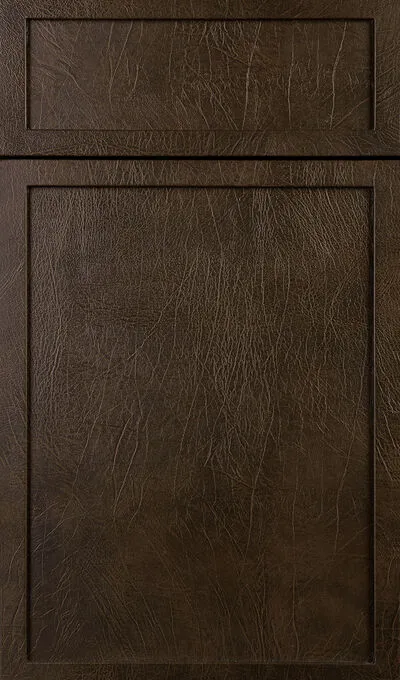
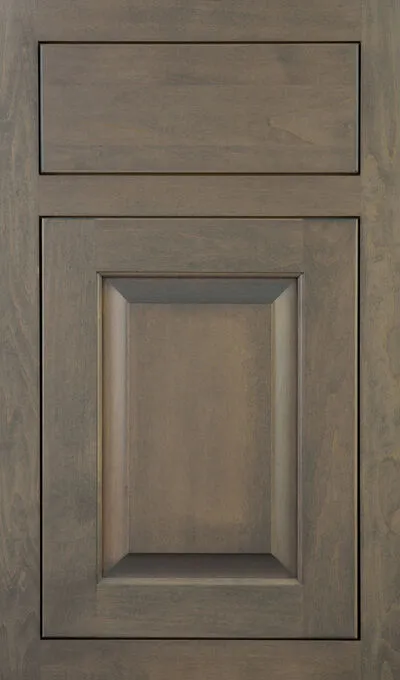
a typical face frame stile is 1½" to 1¾". pair it with a 2½" door rail and the two compete. pair it with a slim frame near the same width and the elevation settles into a grid. Lispenard Frame is our inset shaker with a measured, mid-width frame. Spring Street Leather is the slim-shaker version, for rooms that want a finer line.
why slim frames demand better construction
a 1¼" rail has less material to resist movement. new york apartments swing from about 20% relative humidity in a steam-heated february to well above 60% in august. a thin frame in unstable stock will twist or open at the joint.
this is a build issue, not a style issue. it means stable, properly dried stock, tight joinery and a durable catalyzed finish so a hairline does not telegraph at the corner. it is also why slim shaker cabinets can carry a modest premium over mid-width frames, typically in the range of 5–12% on the door, because tolerances are less forgiving.
how to keep a shaker kitchen current
shaker is not going anywhere, but certain versions age faster than others. here is what keeps it fresh.
- narrow the frame. moving from 2¾" to about 1½" is the single biggest update.
- square the inside edge and keep the panel recess shallow.
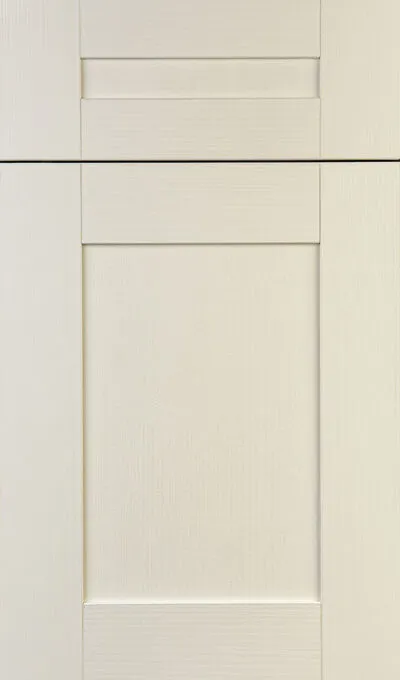
- choose finish with intent. a flat-sheen white such as Blanc gives a slim frame a graphic outline. a natural veneer like Vertical Grain Fir turns the same geometry warm and quiet, since the grain runs unbroken through frame and panel.
- keep hardware proportionate. a slim door wants slim pulls, either a 4" to 6" bar or a finger edge. a chunky knob on a 1¼" rail looks like a mistake.
- edit the details. no applied bead, no cup pulls on every door and no routed corners. let the frame be the only decoration.
choosing for your kitchen
in a brownstone with 10' ceilings and tall uppers, a mid-width frame keeps the cabinetry from feeling spindly. in a compact co-op galley with 8' ceilings and narrow units, slim shaker keeps the panels legible and the walls calm. in a loft with large open runs, either works. let the number of narrow doors and short drawers decide.
the easiest way to settle it is to hold two frames side by side in your own light. you can browse the full range under all door styles, then compare rail widths in person.
see it in person
shaker is a decision about millimeters, and photographs flatten them. request a sample door or book a showroom visit in manhattan or cedarhurst (south florida by appointment), and we will put a classic, a mid and a slim frame in your hands, in the finish you are considering.
mentioned in this note
keep reading
North-Facing Kitchen Colors: How Light Shifts Greige, Green and Off-White
Cabinet colors for low light: how north-facing light changes greige, green and off-white, and how to test a door before you commit.
Small Kitchen Storage Ideas: Pantries, Toe Kicks & Corners
A small kitchen doesn't need more space, it needs better cabinetry. Shallow pantries, toe-kick drawers and corner solutions that earn their cost.
Appliance Garage & Coffee Bar Cabinets: Clutter Solved in Millwork
How to build an appliance garage cabinet and coffee bar cabinet that hide the machines, handle heat and steam, and keep the counter clear in a New York kitchen.