Cabinet Interiors: Dividers, Pull-Outs & Waste Worth Paying For
What goes behind the door matters more than the door. Drawer dividers, pull-outs and waste centers: where to spend, where to skip, with real dimensions.
· the kitchen guy
the door is what people photograph. the interior is what you touch four hundred times a week.
in a new york kitchen, where a galley might give you 9 linear feet of base run and a pre-war co-op rarely gives you a pantry, every cubic inch behind the door has to work. here is how we think about cabinet interior organizers: what earns its cost, what doesn't, and what has to be decided before the cabinets are built, not after.
start with the drawer box, not the divider
an organizer is only as good as what it sits in. before you add a single insert, check the box itself.
- joinery: solid hardwood, dovetailed or doweled sides, not stapled particleboard. ours are built in hardwood with a finished interior.
- runners: full-extension, soft-close, concealed. a good set carries 75–100 lb per drawer. a 30-inch pots-and-pans drawer, loaded, can reach that.
- depth: a 21–24 inch drawer gives you real storage. shallower boxes waste the back third of the cabinet.
if the box flexes or the runner sags, no divider will fix it.
drawer dividers: where the money works hardest
dividers are the cheapest way to make a kitchen feel expensive. a drawer that stays organized after a year is a drawer that was measured for its contents.
cutlery and utensils
a 24-inch-wide drawer holds a full cutlery tray plus a utensil section. go to 30 inches if you cook with long tools. fixed hardwood dividers cost roughly $150–$600 per drawer, depending on species and how many compartments you want. adjustable trays sit at the low end.
plates and bowls
deep drawers, 8–10 inches inside, with a peg system, replace upper cabinets for everyday dishes. you lift from above instead of reaching overhead, which matters in a galley where wall cabinets are already stacked to the ceiling. peg systems run about $300–$800 per drawer.
knives, spices, and the shallow drawer
a 3-inch-high drawer with an angled spice insert holds 20–30 jars and you read every label at once. an in-drawer knife block keeps blades off the counter, which is worth a lot when you have 24 inches of prep space.
pull-outs: the interiors worth the premium
a pull-out is a shelf that comes to you. the useful ones solve a specific problem.
- base pantry, 6–9 inches wide: fits beside a range or refrigerator where nothing else would. oils, vinegars, tall bottles. expect $200–$500.
- tall pantry, 12–18 inches wide: full-height pull-out columns replace a reach-in closet. in a 1920s apartment with no pantry, one 15-inch column holds roughly what a 30-inch shelved cabinet does, and you can see all of it.
- blind-corner units: the most overpriced and most useful accessory in the catalog. $600–$1,800, and only worth it if the corner is truly blind. if you can redesign the corner into drawers, do that instead.
- tray and sheet-pan dividers: vertical slots 3 inches apart, in a 12–15 inch cabinet over or beside the oven. cheap, simple, and the cure for avalanche storage.
waste and recycling: plan it like an appliance
new york's sorting rules, with recycling, organics and trash separated in most buildings, mean a single bin under the sink is no longer enough.
the layout we specify most often:
- an 18-inch base cabinet with two 35-quart bins on a full-extension carriage, one for trash and one for recycling.
- a separate countertop-adjacent organics bin, either a small pull-out or a lidded container in a shallow drawer.
- placement within one step of the prep zone, never beside the dishwasher door swing.
a good waste pull-out is $250–$700 installed in the cabinet. a bad one rattles, sticks, and gets removed in two years. look for steel carriages and soft-close that can handle 40 lb of wet weight.
and keep the sink base clear. under-sink space is for the plumbing, a filter and cleaning supplies, not a bin that fights the trap.
inset versus frameless: the interior is different
this changes what you can fit, so decide early.
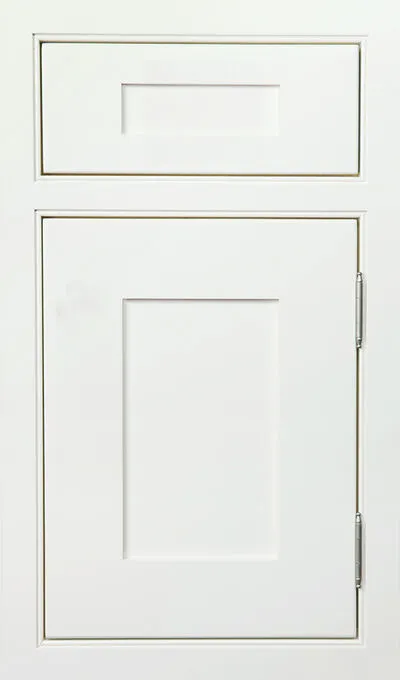
in inset construction, the door sits inside the face frame. that frame typically takes about 1½ inches from each side of the opening, so the usable interior of a 24-inch cabinet is closer to 21 inches. pull-outs must be sized to the opening, not the box. our inset styles, such as Hudson in slab or Clinton Wide in shaker, are designed with this in mind, and the drawer boxes are sized to clear the frame.
in frameless construction, the box fills the full cabinet width, so you gain that 2–3 inches back. in narrow cabinets of 9 or 12 inches, that difference is the gap between a pantry that works and one that doesn't.
neither is better. inset is a look and a build quality we love in brownstones and pre-war rooms; frameless is the choice when every inch of capacity counts. we'll tell you which suits your room, and you can browse both in our collections.
what to skip, and what to match
skip: swing-out shelves in corners with fewer than three usable shelves, mixer lifts you will not use weekly, and pull-down upper-cabinet racks unless reach is a real limitation. lots of moving parts, little payoff.
spend on: deep drawers in the base run, one proper waste center, and a tall pantry pull-out if you have no pantry.
the finish of the interior matters too. a clear-coated hardwood interior lasts longer than a thin laminate liner, especially under a sink or next to a dishwasher. for open-drawer glimpses, we like a wood interior that contrasts with the exterior. a painted door with a True Walnut drawer interior is the kind of detail you notice every time you open it.
match your hardware weight to the interior too. a 36-inch drawer loaded with cookware needs a pull that matches the mass of the drawer front. we cover pull scale in more depth in our hardware guides.
see it in person
the only way to judge an interior is to open it. request a sample door or a showroom visit in manhattan or cedarhurst, and we'll bring a drawer with the dividers you're considering, loaded the way you'd actually use it.
mentioned in this note

keep reading
Loft Kitchen Design Around Cast-Iron Columns
Cast-iron columns are the best thing in a loft kitchen. Wrap them in an island or hide them in a run, and here is how the cabinetry has to be built.
Base Cabinet Drawers vs. Doors: Why We Spec Drawers
Drawers beat doors in nearly every base cabinet. Here is how we spec them for tight NYC kitchens: widths, depths, load ratings, and the few places doors still win.
Kosher Kitchen Design: Two of Everything, Done Elegantly
A kosher kitchen layout doubles sinks, dishwashers and storage. Here is how to plan the cabinetry so it reads as one calm room, even in a tight New York footprint.